
Magazine Policy & EU Innovation
Postponement of the European AI Act: what changes for startups and businesses
Postponement of the European AI Act: provisional deal delays high-risk duties, bans nudifiers, and streamlines enforcement for startups.
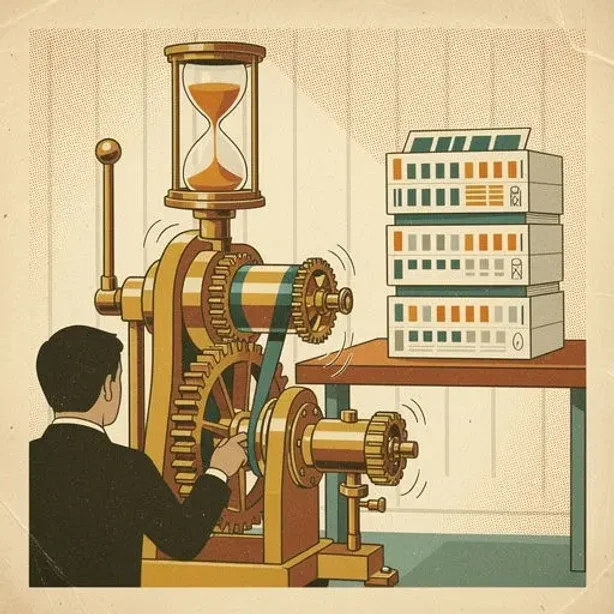
The postponement of the European AI Act is now at the center of the provisional agreement reached between the European Parliament and the Council in the morning of May 7, 2026: the modification aims to shift the entry into force of certain obligations for high-risk classified systems, giving companies more time to adapt. This delay is designed to reduce the immediate regulatory burden on businesses and enable the definition of technical standards and operational guidelines.
What the agreement contains and why it matters
The agreement, included in the so-called Digital Omnibus, does not dismantle the AI Act’s risk-based approach but introduces delays and clarifications on scope and enforcement. The rules will become fully applicable as of December 2, 2027 for high-risk use cases, while for systems used as safety components and already covered by sectoral regulation the date shifts to August 2, 2028.
Postponement of the European AI Act for high-risk systems
The high-risk areas include biometrics, critical infrastructure, education, work, law enforcement, and border management. The postponement until December 2, 2027 gives companies and suppliers more time to build dataset registries, human oversight policies, risk management systems, and inference logs.
The Commission proposed the Digital Omnibus on November 19, 2025 with the goal of reducing administrative burdens and compliance overhead for businesses.
Practical implications for startups and scaleups
For many European startups, the postponement is not a mere administrative detail: it means more runway to map use cases, build model cards, define human controls, and integrate internal auditing into product workflows. This additional time must be used to turn compliance from a legal component into an integral part of the product and operational processes.
Practically, companies should plan activities such as vendor assessment, dataset registries, red-teaming, and incident response with increasing priority. Anyone working on AI should translate the AI Act’s principles into requirements in the product requirement document and in post-market monitoring.
Postponement of the European AI Act and timing measures
The deal’s key dates are clear: December 2, 2027 for most high-risk cases, August 2, 2028 for systems acting as safety components already regulated, and December 2, 2026 as the deadline to comply with the nudifier ban. These milestones should be included in the legal and technical roadmap of any startup developing or integrating high-impact AI systems.
For companies already operating in regulated sectors, the new text seeks to avoid duplicative compliance when the vertical regime provides an equivalent level of health and safety protection.
Crackdown on synthetic content: what changes for consumer products
The agreement introduces a hard ban on AI systems designed to create material depicting sexual abuse of minors or to represent the intimate parts of an identifiable person without consent; the rule covers images, videos, and audio. Companies will have until December 2, 2026 to adjust products and implement reasonable technical measures, including safety layers and prompts-injection filters.
This means that for those developing consumer applications, simply stating the prohibited use in the terms of service is no longer enough: the text requires demonstrable technical measures and active prevention processes. Compliance must therefore include testing, moderation tools, and abuse-prevention policies integrated into the product release.
Reducing regulatory overlaps for embedded AI
A sensitive point for sectors like robotics, automotive, medtech, and energy concerns the potential duplication between the AI Act and product regulations (CE marking, Machinery Regulation). The agreement eliminates some overlaps, providing for the application of the vertical regime when it ensures an equivalent level of health and safety protection.
This pragmatic approach can reduce documentation burdens and product obligations when AI assists the user or optimizes performance without introducing direct health risks. Companies and suppliers will, however, need to demonstrate equivalence of protection through technical documentation and risk assessments.
Enforcement and governance: moving toward a central role for the European AI Office
The agreement provides for a rationalization of enforcement for certain AI systems with general purposes, giving a more centralized role to the European AI Office to avoid fragmentation among national authorities. A centralized oversight aims to make compliance more predictable for operators active across multiple EU markets.
Medium-sized enterprises also have flexibility margins: certain exemptions designed for SMEs are extended to small mid-cap enterprises, recognizing technical capacity but a smaller legal and compliance framework compared with big tech. This can ease burdens for many scaleups that still lack large legal departments.
Critical debate: pros, cons, and residual risks
The postponement of the European AI Act opens a broad debate between proponents of pragmatic regulation and those fearing delays in addressing AI’s social risks.
On one hand, postponing obligations allows startups to build concrete governance processes and authorities to develop technical standards useful for interpretable and applicable compliance.
This operational advantage is balanced by risks: the extra time could slow the adoption of preventive measures against widespread abuses like deepfakes and automated decision-making, especially if technical standards lag behind. If guidelines and tools are not ready in the next 12-18 months, the postponement could translate into prolonged regulatory uncertainty.
A further factor is the potential disparity in application among member states: enforcement centralization can reduce fragmentation, but the transition requires clarity on the role and resources of the European AI Office. Without clear governance and adequate resources, companies may face divergent interpretations in national markets.
Finally, the nudifier ban signals Europe intends to maintain a tough line on abusive content: it’s a strong political message, but it implies consumer startups will need to invest immediately in filters and safety layers. This principled choice benefits user protection and trust, but raises the technical bar for go-to-market of content-generating products.
Operational guidelines for founders and product managers
To turn regulatory uncertainty into a competitive advantage, startups and product teams should follow an operational checklist: map high-risk use cases, create a dataset registry, produce model cards, define human-in-the-loop, and set up logging and an audit trail. Incorporating these elements into the product requirement document is the priority from now through December 2, 2027.
Other practical activities: conduct vendor assessments, schedule periodic red-teaming, establish incident-response procedures, and prepare post-market monitoring documentation. These measures will not only ensure regulatory compliance but also reduce operational risk and boost investor confidence.
Immediate technical priorities
Implement anti-abuse controls, filters for generating sensitive content, and opt-in/consent mechanisms for identifiable images and audio are mandatory steps for those operating in consumer AI. The December 2, 2026 deadline to comply with the nudifier ban requires rapid interventions on safety layers and moderation pipelines.
Leveraging the postponement window
The time gained should be used to build a scalable compliance process that becomes a product differentiator: transparency about datasets, performance and risk metrics, and automated reporting to auditors and authorities. Whoever translates compliance into a product advantage will also position themselves better in the European market.
What will be the next move of the co-legislators
The agreement is provisional and must be formally adopted by Parliament and Council, with the aim of completing formalities before August 2, 2026, the date from which the current high-risk rules would come into effect. Monitoring legislative steps and Commission guidelines is therefore essential to update roadmaps and contracts with customers and suppliers.
One final reflection for those building technology in Europe
The adjustment of the AI Act is not deregulation: it is an attempt to make a complex law workable without stifling innovation and homegrown expertise. The real test will begin when these principles are translated into corporate workflows and the product’s DNA.
For European startups and investors, the practical question is clear: how can regulatory requirements be turned into repeatable processes that increase reliability, reduce reputational risk, and accelerate scalability? Investing now in governance, testing, and documentation is the strategy that will separate those who survive from those who merely react to regulation.
Recommended operational resources
Schedule internal quarterly audits, create model cards and dataset registries aligned with international standards, and plan legal reviews during product releases. These steps will enable you to respond quickly to authority requests and commercial partners.
Towards a sustainable implementation of the regulation
If applied pragmatically, the postponement of the European AI Act can become a tool to build more resilient and responsible technology ecosystems in Europe. The challenge for founders and policymakers is to make compliance an asset rather than a mere cost of compliance.
*Source:*https://www.startup-news.it/ai-act-rinvio-e-stretta/
Related articles
-
The Space Economy in Europe: Record Budgets, Thin Margins, and Strategies to Compete
The European space economy grows budgets but margins stay tight. Data, Bromo JV, dual-use and capital: building competitiveness.
-

NGI European Calls: Three New Opportunities for the Digital Future
Three NGI calls offer €5k–€50k for projects due by April 1, 2026. Learn who can participate and what it means for startups.
-

STEP Platform for European Technologies: Practical Guide and Funding Opportunities
Discover the STEP Platform for European Technologies: goals, calls, and timelines for innovative projects in Tuscany and beyond.
-

Italy's National Cyber Perimeter: Who Really Guards the National Cyber Borders
Explore Italy's national defense cyber perimeter: roles, structures, operational challenges, and current staffing data today.